Political Parties!
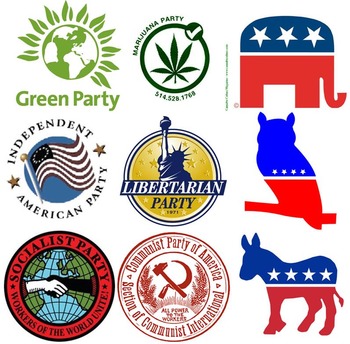
Elected officials are also responsible for representing the concerns commonly established amongst members of the political party they identify with. However, it should be noted that they are meant to attract interest and support of those who do not identify or ideologically align with their political party, through either bipartisan methods (issues that cross party lines) or nonpartisan methods (issues that are not concerning political parties).
POLITICAL PARTIES 2018 MIDTERM ELECTIONS
The 2018 midterm elections revealed a correlation between regions and the overall voting direction of either Democratic or Republican. The map below was produced by BBC.com in their article
The 2018 midterm elections revealed a correlation between regions and the overall voting direction of either Democratic or Republican. The map below was produced by BBC.com in their article
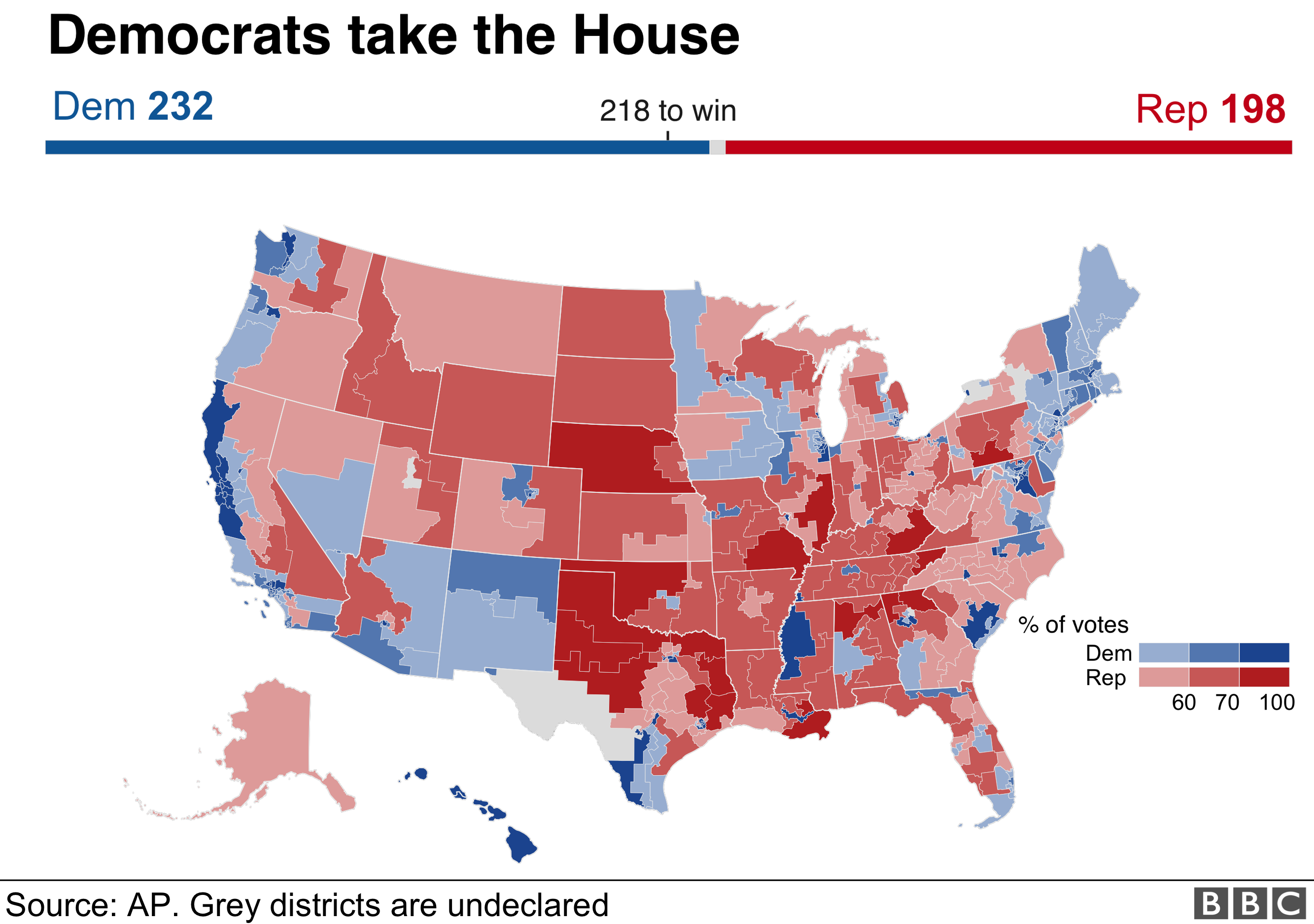
The graph demonstrates that Democrats performed best in heavily populated regions and major cities (including but not limited to Los Angeles, San Francisco, San Diego, Seattle, Las Vegas, Chicago, New York City, Boston) which are mostly liberal, progressive areas. Democratic voters are usually found in smaller regions occupied by majority cities (southern California for example). Major cities are mostly composed of those who align with Democratic, liberal and progressive values. Regions and states with dark bluer emphasize the higher concentration of Democratic voters. The coast of California is covered in dark blue, indicating a trend of coastal cities in densely populated metropolitan area align predominantly Democratic and progressive.
Democratic successes can also be found in multiple coastal northeastern states such as New York, Rhode Island, Connecticut, Massachusetts, who all went explicitly blue according to the map. This region of the US possesses many US major cities - New York has New York City with a population of 8.6 million people, Massachusetts has Boston 685,000 people, Baltimore has a population of 611,000. However, this does not mean that these states and regions are void of Republican voters, instead, they have an overwhelming demographic of Democratic voters in
Washington is a prime example of the aforementioned phenomenon. The Seattle metropolitan area possesses a population of nearly 3,800,000 people, with is approximately half of Washington state's population of 7,406,000 million citizens. The Seattle metropolitan area is buzzing and continues to expand with its generally liberal ideologies, and voter proclivity for the Democratic Party. Almost the
Republicans best performed in southern states, mid-western states, and rural areas even in states that went dominantly blue. The darker red demonstrates the highest concentration of Republican votes. Areas such as Louisiana, Missouri, Alabama, and Tennessee, are covered in heavily Republican votes. These parts of the United States generally hold more conservative value, and because conservative ideologies are largely rooted in Republican values, these states went Republican for 2018 midterm elections.
Rural areas (eastern Washington, northern and central Texas, desert regions of California) usually possess smaller populations with mostly Republican, conservative voters. In terms of map representation, these areas being covered in strictly red can mislead viewers to believe that these areas are composed strictly of Republican voters, and also that rural regions don't have any sort Democratic voter demographic. Wyoming, for example, is all red. This doesn't mean Wyoming is void of any Democratic voters, but it's a largely rural state, so those who do vote are Republicans, and therefore represent the majority of the state because of these miles and miles of rural land with smaller conservative members of society.


Comments
Post a Comment